
Project Overview

Forty-five years after Robert Mapplethorpe created his X portfolio, the spaces and communities that gave those images their power are disappearing. Cruising bars, fetish clubs, leather nights, and the backrooms that shaped a generation of queer culture are closing, relocating, or being absorbed into an increasingly sanitised mainstream. This project responds directly to that loss and to what remains.

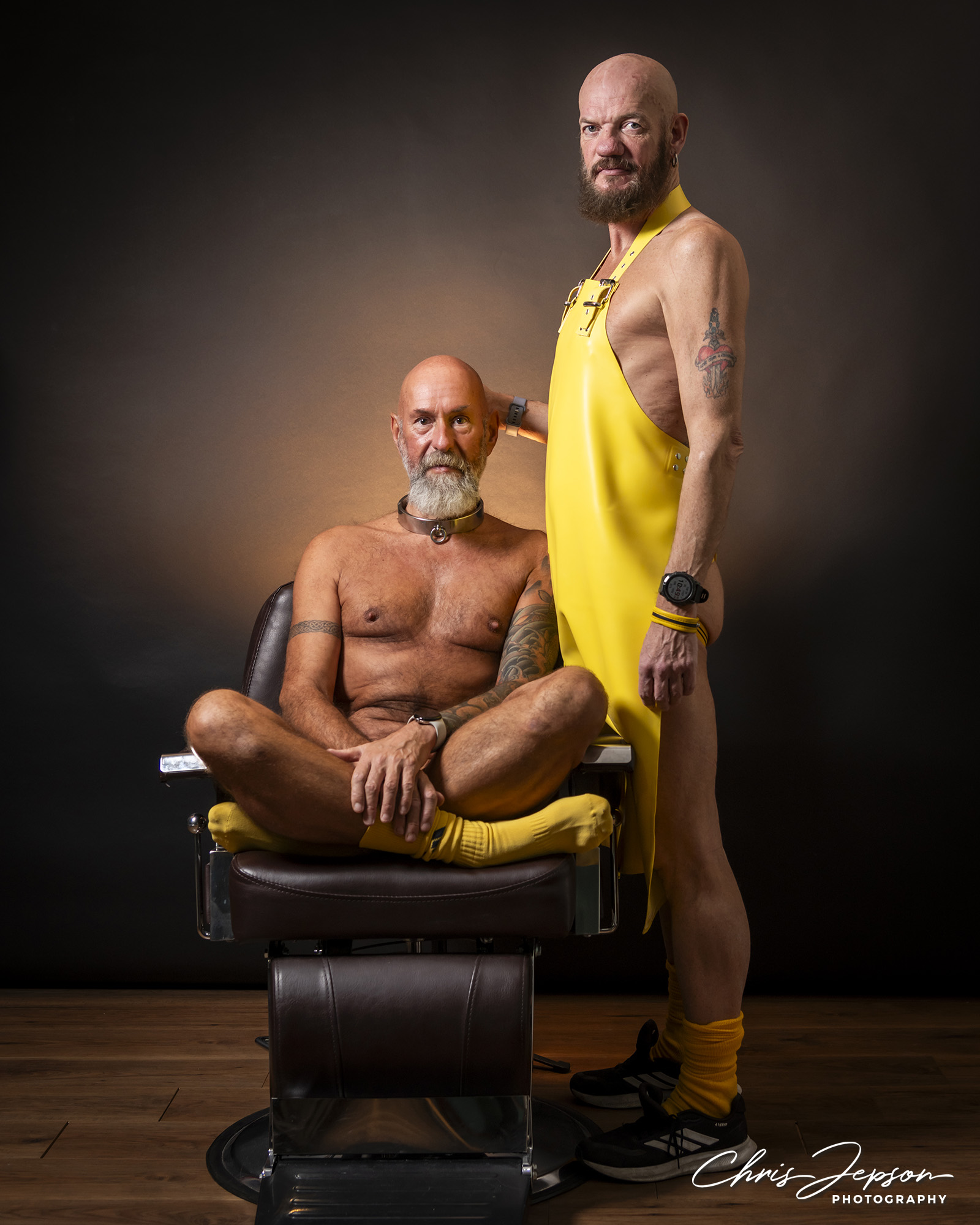
KINK is a fine art photography project documenting Brighton & Hove’s fetish and S&M community, created in the spirit of Mapplethorpe’s unflinching gaze but rooted firmly in the present. Where Mapplethorpe worked in a New York scene defined by anonymity, danger, and the shadow of a coming epidemic, this project works in a city that is simultaneously one of the most queer-friendly places in Britain and one where the physical infrastructure of queer life is being steadily dismantled.

Context and Rationale

Mapplethorpe’s X portfolio was not shock for its own sake. It was an act of documentation, of legitimisation, and of artistic insistence that these bodies, these acts, and these relationships deserved the same formal rigour and aesthetic consideration as any classical nude. The photographs are beautiful because he demanded they be beautiful and that demand was itself political.

Brighton & Hove’s fetish community occupies a similar position today. It is simultaneously visible and embattled. Venues that have held leather nights, kink events, and fetish markets for decades face hostile licensing committees, noise complaints from new residential developments, and the quiet attrition of landlords selling to developers. The community itself is ageing in some respects, younger in others, and is having ongoing conversations about consent culture, inclusion, and what it means to practise kink in 2024.

This is the right moment to make photographs.

Artistic Approach

The work will draw on Mapplethorpe’s formal rigour, high contrast, considered lighting, and deliberate composition, while being made entirely on my own terms and in full collaboration with the community being photographed. This is not an outside eye looking in. It is a queer photographer with extensive lived experience of the kink scene, working with queer subjects to produce images that reflect their own understanding of their bodies, desires, and identities.

Photographs will be made in a range of settings: studio portraits using controlled lighting, environmental portraits within existing fetish venues and private spaces, and location work in Brighton’s queer geography, including alleyways, seafront spaces, and the remnants of the scene that still exist. The portfolio will include individual portraits, couples, groups, and detail work, hands, restraints, leather, latex, rope, skin, that echoes Mapplethorpe’s attention to the object as well as the person.

Where Mapplethorpe’s images often present their subjects as sealed, self-contained and slightly removed, this project will also make space for the relational. The tenderness between a dominant and their submissive. The intimacy of aftercare. The humour and play that are part of kink culture but rarely make it into the art. These are not lesser images. They are part of the truth of the subject.

All participants will be fully involved in decisions about how they are represented.

Understanding Kink: Desire, Power, and Identity

Kink is not a single thing. It is a broad and varied set of practices, desires, and communities that centre on the consensual exploration of power, sensation, role, fantasy and the body itself. For many people, kink is primarily erotic. For others it is deeply tied to identity, community and belonging. For others still it is a form of play, of ritual, or of psychological exploration that operates largely outside the erotic altogether.

Within queer communities specifically, kink has long carried meanings that go beyond the sexual. The leather scene that emerged in American and European cities after the Second World War was not simply about sex. It was about the construction of a masculine identity outside the norms of straight society, about chosen family, about codes and rituals that created belonging in a world that offered none. The hanky code, the hierarchy of the club, the protocols of dominant and submissive relationships: these were systems of meaning as much as systems of desire.

Kink also offers something that mainstream culture rarely does: a framework for thinking carefully and explicitly about power. Negotiation, consent, safewords and aftercare are not incidental to kink practice. They are central to it. In a culture that still struggles to talk honestly about desire, boundaries and the dynamics of power between people, kink communities have developed sophisticated languages and ethics that the wider world is only beginning to catch up with.

For many practitioners, engaging with kink is inseparable from their sense of self. The submissive who finds freedom in relinquishing control. The dominant who carries the weight of responsibility for another person’s experience. The person for whom leather, latex, or rope is not a costume but a second skin. The masochist who understands their own body and its capacity for sensation in ways that most people never will. These are not pathologies. They are ways of being in the world.

Queer Kink: Then and Now

Mapplethorpe’s X portfolio was made in a specific world. The New York leather and S&M scene of the late 1970s was overwhelmingly male, overwhelmingly gay and defined by a particular vision of masculinity that was itself a reaction against the feminisation of gay men in mainstream culture. The subjects of those photographs are men. The desires they enact are between men. The aesthetic is one of hard bodies, defined musculature and an almost classical rigidity that owes as much to Greek sculpture as it does to the backrooms of the Mineshaft.

That world produced extraordinary art and extraordinary community. It also had its limitations and exclusions, many of which the people within it were aware of and contested even at the time.

The queer kink community of Brighton & Hove in 2026 is a fundamentally different proposition. It is not defined by a single gender or a single sexuality. Women, non-binary people, trans men and women, genderqueer and genderfluid individuals are not guests in the contemporary kink scene. They are central to it, shaping its culture, its aesthetics, its ethics and its politics. The bodies in this project will not conform to a single ideal. They will be big and smll, scarred and smooth, hormone-altered and surgically modified, adorned and bare. They will refuse the classical.

The expansion of kink beyond its mid-century gay male origins is not simply a matter of inclusion in the liberal sense. It has produced genuine change. Non-binary and trans participation in kink has complicated and enriched the community’s understanding of gender, of the relationship between the body and identity, of what it means to present oneself, to perform and to be seen. The concept of a leather Daddy means something different when the Daddy is a trans man. A femme in a harness is not simply a woman borrowing from gay male aesthetics. She is doing something else entirely, something that requires its own vocabulary.

Genderqueer kink also tends to foreground consent and negotiation in ways that have been genuinely generative for the wider community. When nothing about gender, role, or desire can be assumed, everything must be discussed. That necessity has produced communities with some of the most developed consent cultures anywhere in queer life.

KINK will interrogate this breadth. It will make photographs of people across the full spectrum of gender identity, body type, and kink practice. It will not impose a single aesthetic or a single vision of what queer kink looks like. The only constant will be the formal rigour of the work and the dignity with which every subject is treated.

The Loss of Space

Any honest account of queer kink in Britain today has to reckon with the disappearance of the physical spaces in which it has lived. Brighton, and the UK as a whole, has lost a significant number of its LGBTQIA+ venues over the past decade. The causes are familiar: rising rents, the conversion of commercial properties to residential use, noise complaints from new neighbours who moved in knowing a club was there, licensing authorities who treat fetish events with a suspicion they do not apply to straight nightlife, and the steady erosion of a customer base whose members can now meet online rather than in person.

Fetish venues face particular pressure. They operate in a legal and social grey area that makes them vulnerable in ways that mainstream gay bars are not. A licence can be challenged. A venue can be raided. A landlord can simply decide that the reputational risk is not worth the rent. The result is that spaces which have held community for decades, which have been the site of first experiences, long relationships, chosen families, and genuine culture, are gone and are not being replaced.

This project will record what remains. It will make photographs in surviving venues, recording not just the people but the spaces themselves: the architecture of the dungeon, the lighting rig above the sling, the hooks and rings set into walls that have held a thousand scenes. These images will be an archive as much as an artwork.

Community Engagement

Proud Studios CIC will work with established contacts in Brighton’s fetish and kink community to identify participants, build trust, and ensure the project reflects the genuine breadth of the scene across age, gender identity, body type, ethnicity, and experience. This will include outreach through existing venues, events such as Brighton Fetish Weekend, and community networks.

Participants will have the opportunity to review images before publication and will be credited according to their own preferences: named, pseudonymous, or anonymous. A community preview of the work will be held before any public exhibition, giving participants and their communities the first opportunity to see and respond to the finished photographs.

Deliverables

The completed project will produce a portfolio of fine art prints, exhibition-ready and produced to archival standard. Alongside the photographs, the project will produce a publication, a monograph or zine depending on funding, that includes the images alongside contextual text, participant statements, and an essay situating the work within both photographic history and the current crisis facing queer spaces.

An exhibition is planned for a Brighton venue, ideally one connected to the queer community itself, with the ambition of touring to other cities where fetish communities face similar pressures, including Manchester, London, and Glasgow.

Why Now

Queer spaces are not just closing. They are being forgotten, their histories unmade, their communities scattered. Mapplethorpe photographed a world that was about to be devastated by AIDS. We are photographing a world being quietly dissolved by economics, legislation, and a mainstreaming that mistakes tolerance for acceptance.

These photographs will exist when the venues do not. That is the point of making them.

The Photographer

Chris Jepson is an award-winning photographer and director of Proud Studios CIC, Brighton. His work, including The Identity Project, Beyond the Binary, and Uncut, has consistently placed LGBTQIA+ lives at the centre of serious artistic attention. Queer Elders, currently in development, continues that commitment across generations. X is a natural extension of that body of work into territory that is underrepresented, contested, and urgent.

X is a Proud Studios CIC project.