


Samson
he/him
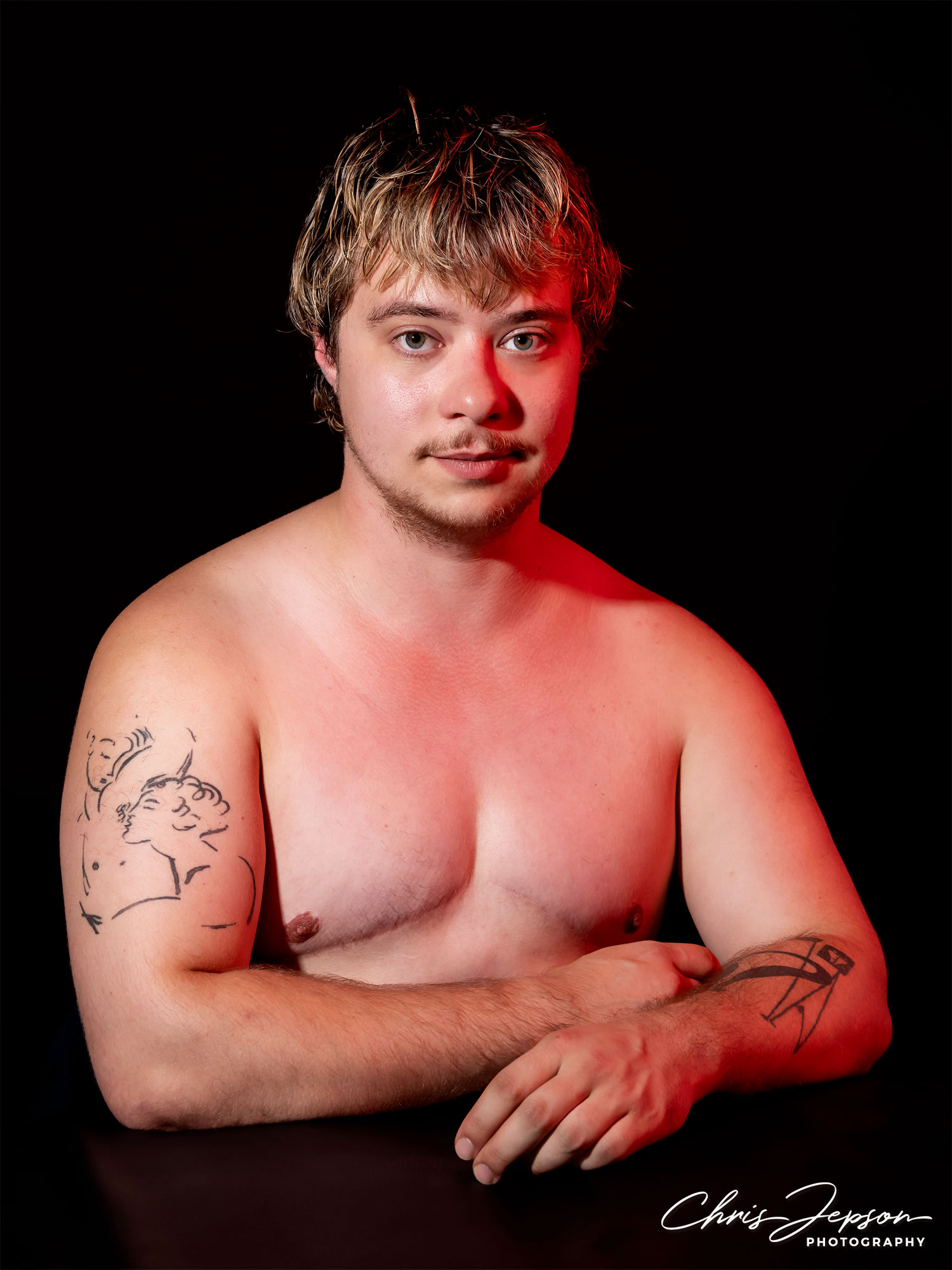
Samson, a gay trans man, has three tattoos, each drawn from twentieth-century artists. The one featured here is a Duncan Grant illustration, one of the drawings he worked on during his PhD.
Duncan Grant (1885 to 1978) was a British painter and central figure in the Bloomsbury Group. In 1959 he gave a friend a folder of over four hundred erotic drawings marked “these drawings are very private”, depicting sex between men. They were long thought destroyed but had instead been passed privately from friend to friend for decades, before being donated to the Charleston Trust in 2020, the East Sussex home Grant shared with Vanessa Bell. Samson’s PhD research focused on this collection, work he describes, by his own account, as making him a doctor of dirty drawings.
Beginning his research in the early stages of his medical transition, working on Grant’s drawings was a means for Samson to engage with gay histories that transphobes would prefer he didn’t claim as his own. As a trans man working on a cis gay erotic archive, he has felt both drawn to and alienated by the collection at times. Getting the tattoo was a means for him to reclaim gay culture for himself, and to mark the five years he spent researching the collection.
Samson’s other two tattoos are a surrealist drawing by Max Ernst and a piece referencing Spanish gay playwright and poet Federico García Lorca. The Grant and Lorca tattoos speak to his interest in queer art and history, a way of claiming gay culture for himself by carrying it on his body. The Ernst tattoo nods to his German heritage: Samson lived in Germany for the first seventeen years of his life and still feels connected to the country, though, like Ernst, he chose to leave.
Body Language.
“For over thirty years, my work has centred on visibility, authorship and who gets to be seen.
This project continues my long-term commitment to photographing LGBTQIA+ lives.
For a lot of LGBTQ+ people, modifying the body is a way of marking a transition, standing in for something lost, or taking back a body that wasn’t always theirs to shape in the first place. That personal story is one I want to tell.”
Chris Jepson, photographer