


Terri
they/them
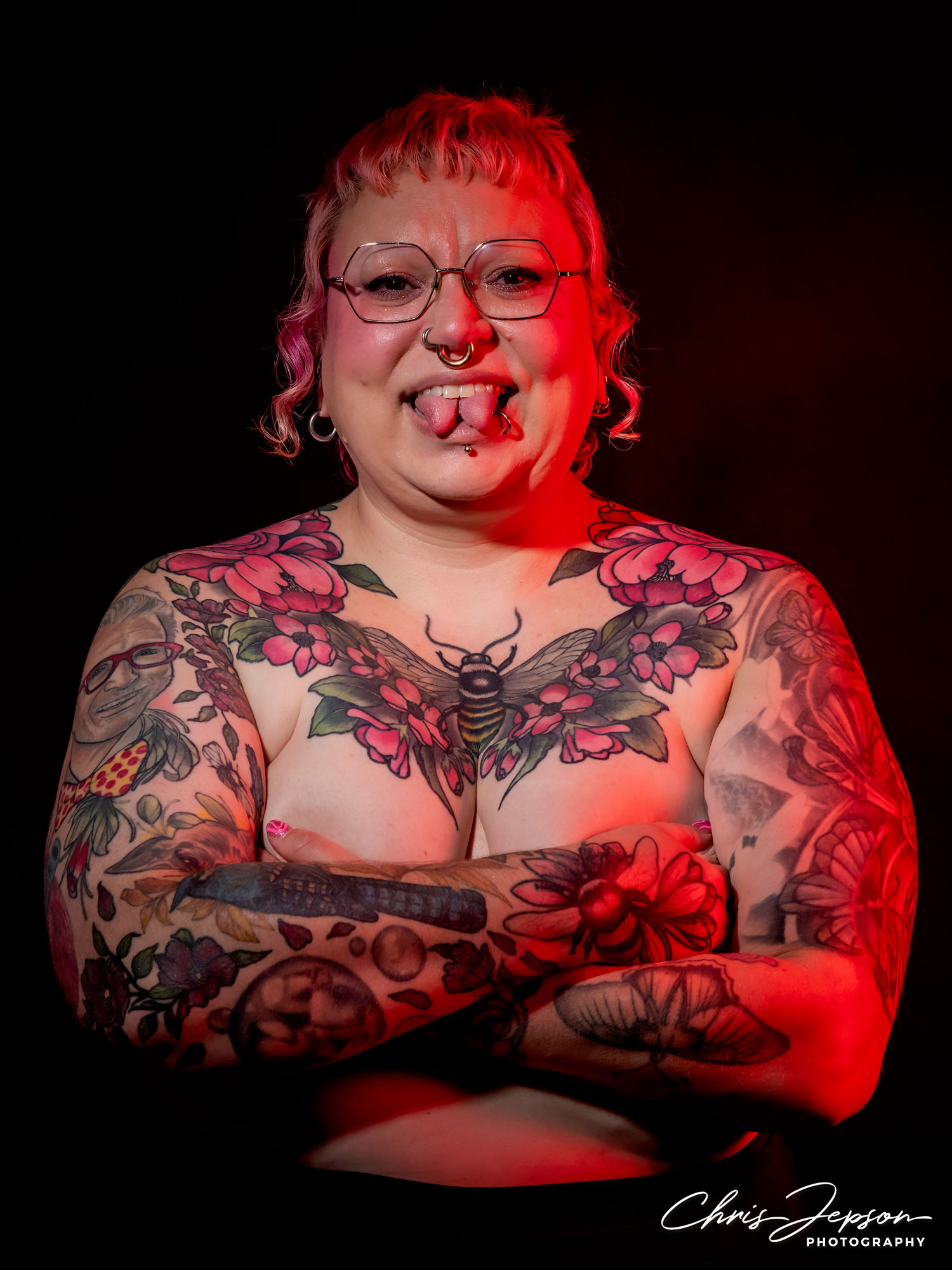
Terri’s body has been a work in progress for thirty-six years. It started small, ears pierced at five, decisions made by someone else about a body that was, in every sense, still theirs. At fourteen they began making those decisions for themselves, and by their early twenties had turned that curiosity into a craft, working as a body piercer specialising in bespoke work, suspension, scarification and the more extreme end of genital piercing.
Piercing other people taught them something about piercing themselves: modification isn’t decoration, it’s a way of saying something the body couldn’t say before, marking a change, standing in for what’s been lost, or simply taking ownership of a form that wasn’t always theirs to shape. Terri is non-binary and heavily tattooed, with more skin still to cover before they’d call themselves finished. Every piece marks a point along the way, and this project is a chance to talk about that history honestly, not as fashion or subculture, but as the long, ongoing process of making a body that actually belongs to them.
Terri’s featured piece runs from a chest tattoo upward, taking in a stretched septum and a split tongue. The chest piece is a blast-over: the original was done in black and grey, but it stopped matching who Terri actually is, so they went bigger and brighter until it did. The flowers on their shoulders came from simply loving their artist’s flash rather than any deeper meaning, but that piece set the direction for everything since, including an iris thigh piece currently in progress.
The stretched septum and split tongue trace back to reading Modern Primitives as a young person, a book on body modification traditions adapted for modern life, credited with helping ignite the tattoo and piercing renaissance of the 1990s. It gave Terri a language for something they already felt, part of the same ongoing project: shaping a body that is genuinely theirs.
Body Language.
“For over thirty years, my work has centred on visibility, authorship and who gets to be seen.
This project continues my long-term commitment to photographing LGBTQIA+ lives.
For a lot of LGBTQ+ people, modifying the body is a way of marking a transition, standing in for something lost, or taking back a body that wasn’t always theirs to shape in the first place. That personal story is one I want to tell.”
Chris Jepson, photographer